
Three things that should not all be true at once are all true right now. The U.S. economy added only 29,000 jobs in September, a number more consistent with a slowdown than a boom. Inflation just accelerated to 3.7% for the twelve months ending September 2026, moving in the wrong direction. And the Federal Reserve, which spent most of 2024 and 2025 cutting rates to nurse the economy along, raised them again in September. A labor market that looks like it needs relief, and a price level that looks like it needs restraint, are pulling the central bank in opposite directions at the same time.
To understand how the U.S. ended up here, it helps to run the tape back five years. Inflation peaked at 9.1% in June 2022, the highest in four decades, and the Fed responded by raising its benchmark interest rate from near zero to its highest level in more than two decades. That worked, slowly. Inflation fell. The Fed then cut rates six times between September 2024 and March 2026, bringing borrowing costs back down to a range that felt, briefly, like relief. The idea was that the fight was won. September’s CPI print suggests it wasn’t.
The gist of it
The filed numbers show inflation re-accelerating, hiring nearly stalling, and the Fed resuming rate increases it had paused for three years. The economy is growing at a modest pace, but the growth is being driven by consumers spending into rising prices, not by a broad expansion. The open question is whether the Fed can cool prices without tipping a labor market that is already barely moving into something worse.
One number did most of the damage
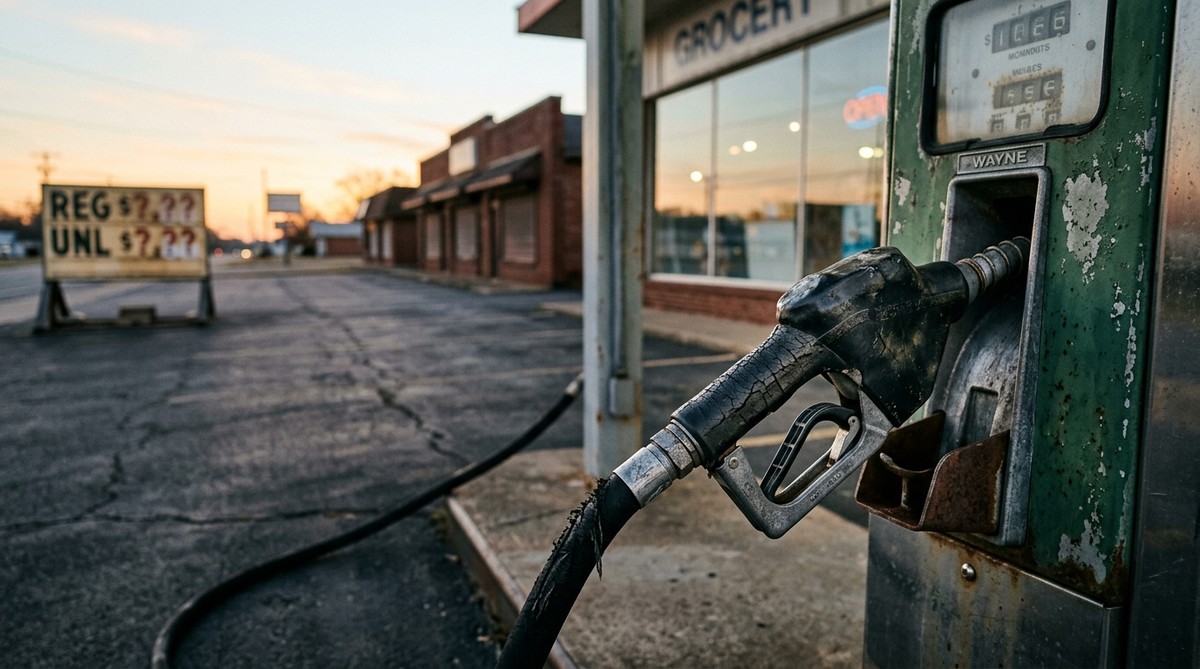
The September CPI release, published October 14, showed that gasoline prices jumped sharply in a single month and accounted for more than half of the entire monthly price increase across all goods and services. That is the energy story in one sentence. Strip out energy and food, which economists do to get a cleaner read on underlying price trends, and the remaining “core” inflation rate rose a more modest 2.6% over the past year. That core number is still above the Fed’s 2% target, but it is not the alarming figure. The alarming figure is the headline: 3.7% annually, up from 3.4% the month before, moving the wrong way.
Shelter costs, meaning rents and the equivalent cost of owning a home, kept climbing in September. Shelter is the stickiest part of the index because leases don’t reprice overnight. A family whose rent went up this year will feel that increase for twelve months before the lease turns over. That persistence is what worries the Fed most, even as gasoline grabs the headlines.
The jobs market is sending a different signal
Employers added 29,000 jobs in September, according to the Bureau of Labor Statistics employment report. For context, the economy needs roughly 100,000 new jobs a month just to absorb new workers entering the labor force. At 29,000, hiring is not keeping pace. The unemployment rate ticked up, and wage growth slowed to the point where the average worker’s paycheck is buying slightly less than it did a year ago, not more.
This is the tension the Fed cannot resolve with a single lever. Raising interest rates makes borrowing more expensive, which slows spending, which eventually cools prices. But it also slows hiring. When hiring is already nearly flat, more cooling is a risk.
Growth is real, but narrowly based
The Bureau of Economic Analysis third estimate, released September 30, put real GDP growth at 2.2% annualized for the second quarter of 2026, a solid-sounding number. But the composition matters. Consumer spending grew strongly, while government spending fell and imports outpaced exports by enough to subtract more than a full percentage point from the total. The economy is being carried by consumers, and those consumers are spending into prices that are rising faster than their wages. That is not a foundation that compounds indefinitely.
The Fed’s own preferred inflation gauge, the Personal Consumption Expenditures index, showed core PCE running meaningfully above the Fed’s target for August 2026, the most recent month available. The September reading arrives October 29. Whatever it shows, it will land after the Fed has already committed to its current posture.
What the people watching this most closely are saying
Joseph Brusuelas, chief economist at RSM US, said after the October 14 release that the data offered “little in the way of cooling prices” and projected one more rate increase before year-end, citing supply shocks from trade, energy, and artificial intelligence. Skyler Weinand, chief investment officer at Regan Capital, went further, telling Kiplinger the Fed “will not tolerate inflation at these levels” and anticipating hikes continuing well into next year. Federal Reserve Bank of Chicago President Austan Goolsbee called the September CPI “discouraging,” noting that services inflation, the cost of things like haircuts, medical care, and restaurant meals, “shows little sign of improvement.”
The FOMC minutes released October 7 showed nearly all policymakers expecting at least one more rate increase by year-end. The next meeting is October 27 to 28, with December seen as the more likely moment for action.
If the math holds, the Fed is tightening into a labor market that has nearly stopped adding jobs, hoping to extinguish an inflation fire that is being fed largely by energy prices it cannot control. That is a narrow path, and the filed numbers as of today do not yet show it widening.
Reading the numbers
- 3.7% headline CPI, year-over-year (September 2026). This is the broadest measure of how much more expensive everyday goods and services are than a year ago, as measured by the BLS across a basket of items a typical household buys. It accelerated from 3.4% in August. Think of it this way: a household spending $1,000 a month on tracked expenses last September is now spending roughly $1,037 for the same basket.
- 2.6% core CPI, year-over-year (September 2026). Core strips out food and energy, which swing wildly month to month, to reveal the underlying trend. At 2.6%, it is above the Fed’s 2% target but well below the headline. The gap between 3.7% and 2.6% is almost entirely the gasoline spike. If energy prices stabilize, headline inflation could fall quickly; if they don’t, it won’t.
- 29,000 nonfarm payroll additions (September 2026). This is the net count of jobs added across the whole private and public economy, excluding farm workers. At 29,000, it is less than a third of the roughly 100,000 needed to absorb new labor-force entrants. A city of 30,000 people added to the employed population sounds large; spread across a 160-million-person workforce, it is nearly flat.
- 2.2% real GDP growth, annualized (Q2 2026). “Real” means after adjusting for inflation, so this is genuine expansion in what the economy produced, not just higher prices inflating the dollar total. Annualized means the quarterly rate projected out to a full year. At 2.2%, the economy is growing at roughly the same pace as its long-run average, which is neither a boom nor a contraction.
- 3.75% to 4.00% federal funds rate target (as of September 16, 2026). This is the interest rate the Fed sets as a floor for overnight bank lending, and it ripples into mortgage rates, car loans, and business credit. The Fed cut this rate six times between late 2024 and early 2026, then raised it again in September. A family refinancing a mortgage today faces a rate environment shaped by that reversal.
Sources
- BLS Consumer Price Index, September 2026
- BLS CPI detailed report (PDF)
- BLS Employment Situation, September 2026
- BLS Employment Situation (PDF)
- BEA GDP Third Estimate, Q2 2026
- BEA PCE Price Index, August 2026
- J.P. Morgan Asset Management: FOMC Statement, September 2026
- Raisin: FOMC Minutes Breakdown, October 7, 2026
- Kiplinger: CPI Report September 2026
- Robert Half: September 2026 Jobs Report