

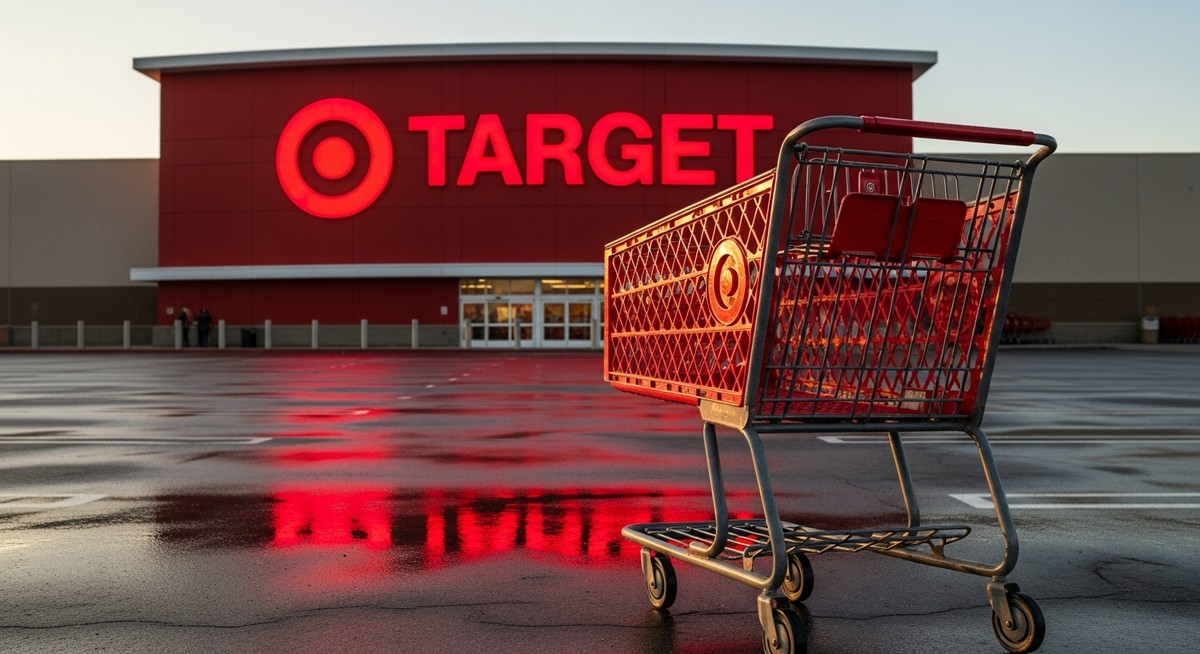
Target built its modern identity on a simple promise: the cheap-chic discount store where a family could grab groceries, a new lamp, and a pair of sneakers in one trip. For a while, that promise printed money. Then came 2022, when a pandemic-era inventory blunder left the company sitting on mountains of unsold goods, and margins collapsed. The years since have been a slow, grinding repair job, with each annual filing showing a business that earns less revenue than the year before but is slowly learning to keep more of what it does earn. Now the stock is back at its 52-week high, and the math and the mood are telling very different stories.
In one breath
Target’s fiscal year 2025 10-K shows revenue falling for a third consecutive year, down to $104.8 billion, while earnings per share slipped to $8.13. The stock trades at roughly 19 times earnings, above its own decade median, meaning the market is paying a premium-history price for a business still posting shrinking sales. The open question is whether the operational fixes now underway, new stores, remodeled formats, and a leadership change, can turn the revenue line before that premium runs out of patience.
Three years of less
The revenue arc is worth sitting with. Fiscal year 2022 was the peak at $109.1 billion. Every year since has been a step down, landing at $104.8 billion in the most recent full year. That is not a rounding error. It is roughly four billion dollars in annual sales that once existed and no longer do, more than Target earns in net income in a good year.
The cause matters as much as the number. The 2022 collapse was self-inflicted: Target over-ordered discretionary goods during the pandemic boom and then had to slash prices to clear shelves, crushing margins. The fiscal year 2024 10-K showed the margin repair in progress, with net margin recovering meaningfully from its trough. But fiscal year 2025 gave some of that back. A business earning three and a half cents on every dollar of sales has very little room for error.
What the most recent quarter adds
The 10-Q for the quarter ended August 2, 2025 offered a mixed picture. Overall comparable sales, meaning sales at stores open at least a year, the standard retail measure of organic growth, fell nearly two percent. Digital comparable sales grew at a healthier clip, which sounds encouraging until you remember that digital is still the smaller piece of the business. The most recent quarterly filing available before today, the 10-Q for the quarter ended May 2, 2026, showed inventory cycling through the shelves less than twice a year, a pace that leaves capital sitting in stockrooms rather than working.
The 247 Wall St. earnings summary for Q2 fiscal 2026, covering the quarter ended August 2, 2026, reports revenue of $25.21 billion and a gross margin of 29.0%, but operating income fell nearly 20% year over year to $1.32 billion. Lower shrink, the industry term for theft and damaged goods, helped cushion the blow, but a drop of that size in operating income is a significant move in the wrong direction for a business already running on thin margins.
The leadership bet
The most consequential disclosure in the recent filings is not a number. It is the appointment of COO Michael Fiddelke as Target’s next CEO. Leadership transitions at large retailers carry real stakes: the person running the business sets the inventory philosophy, the capital allocation, and the pace of store investment. Target’s March 2026 strategic plan calls for more than 30 new stores and over 130 full remodels this year, alongside a projected $5 billion in capital expenditures. That is a large physical bet at a moment when the revenue line is still pointing down.
The balance sheet context matters here. Q1 2026 filings show total debt of $18.83 billion and a debt-to-EBITDA ratio of 2.4, meaning it would take roughly two and a half years of operating earnings to retire all the debt. That is manageable but not comfortable, especially with five billion dollars in annual capital spending and a free cash outflow in Q1. Bank of America analyst Chris Nardone, as reported by Benzinga in August 2026, raised his valuation estimate while expressing skepticism about whether the comparable sales improvement is durable, a cautious read on the durability of the recovery. Wolfe Research’s Spencer Hanus holds the opposite view, citing accelerated turnaround efforts. Both arguments are live, and the filed numbers do not yet resolve them.
Reading the numbers
- Revenue, FY2025: $104.8 billion. What it is: total sales for the year ended January 31, 2026. What it means here: the third consecutive annual decline, down from a $109.1 billion peak. Everyday anchor: a household that once spent $109 at Target each week is now spending about $105. The direction matters more than the gap.
- Net margin, FY2025: 3.5%. What it is: the share of each sales dollar left after every cost, tax, and interest payment. What it means here: margins recovered from a 2.5% trough but are slipping again. Everyday anchor: a coffee shop earning 3.5 cents on a $5 cup has almost no buffer if milk prices rise.
- Operating income, Q2 FY2026: $1.32 billion, down ~20% year over year. What it is: profit from running the stores before interest and taxes. What it means here: the business is generating less from its core operations than a year ago, even as the stock price has risen. Everyday anchor: a landlord collecting less rent this year than last while asking a higher price for the building.
- P/E ratio: 18.7 times, versus a decade median of 15.9 times (our data). What it is: the price tag per dollar of annual earnings, the multiple. What it means here: the market is paying more than its historical norm for a business with declining revenue and slipping margins. Everyday anchor: paying a premium for a restaurant that used to be busier.
The math, as filed, describes a business in repair mode: margins recovering but not yet stable, revenue still contracting, and capital being deployed aggressively into stores and technology. The mood, as priced, assumes the repair succeeds. Those two readings cannot both be right at the same time, and the Q2 2026 earnings report due August 19 is the next piece of evidence the market will use to decide which one to believe.
Sources
- Target 10-K, fiscal year ended January 31, 2026 (SEC EDGAR)
- Target 10-Q, quarter ended May 2, 2026 (SEC EDGAR)
- Target 10-Q, quarter ended August 2, 2025 (SEC EDGAR)
- Target 10-K, fiscal year ended February 1, 2025 (SEC EDGAR)
- Target 10-K, fiscal year ended February 3, 2024 (SEC EDGAR)
- 247 Wall St., Target Q2 2026 earnings summary
- Target Corporation, March 2026 strategic plan press release
- Target Corporation, Q1 2026 earnings press release
- Benzinga, Bank of America analyst commentary, August 2026